We Measure What Technology Does. We Rarely Measure What It Does to People.

The ROI story is real. But the human story is what actually matters—and we almost never tell it.
The Press Release Problem
Last year, I helped publish a press release about a technology transformation we delivered with United Way’s 211 hotline in California. It highlighted that call wait times dropped from ten to twelve minutes down to under three minutes. It celebrated a 10% improvement in operational efficiency and staff scheduling. It talked about cost-efficient migration and modernization.
All true. All real results. And all completely missing the point.
Here’s what that press release didn’t say:
211 is the number people call when they can’t make rent. When they need to find a shelter tonight. When they need food for their kids. In Orange County alone, one in three households struggles to make ends meet. Across the nine California United Ways now being modernized under this program, those systems field over one million calls a year from people in crisis—spanning 28 counties, coordinating with 4,000 community-based organizations.
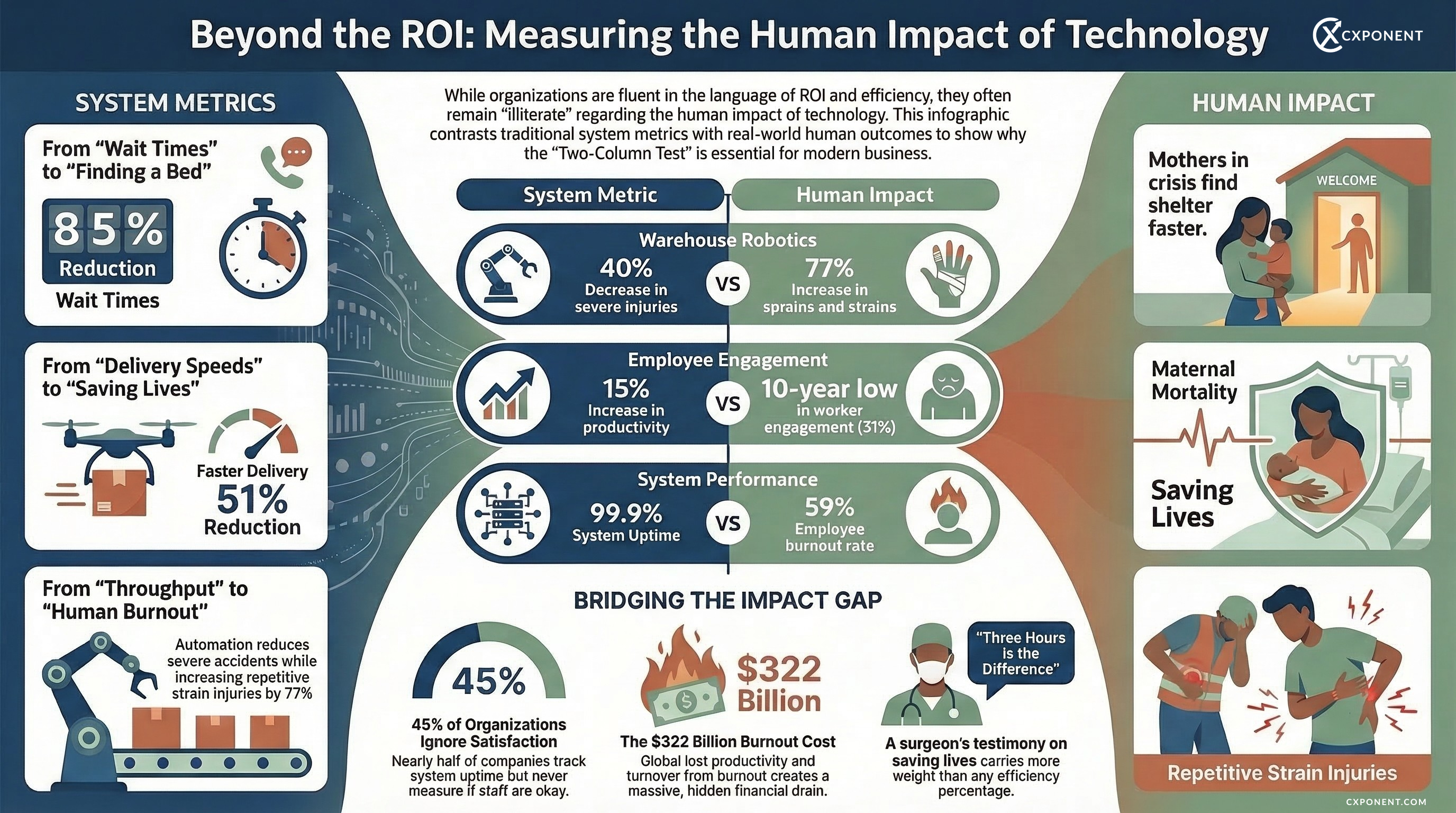
When we cut wait times by 85%, we didn’t just improve a metric. We made it possible for a mother to actually reach someone who can help her find a bed for the night—instead of hanging up after twelve minutes and sleeping in her car.
That’s not an efficiency story. That’s a human story. And we almost never tell it.
• • •
The Language We’ve Lost
I want to be clear: I’m not against efficiency metrics. They matter. They’re how organizations justify investments, secure budgets, and scale programs. Cost savings keep the lights on.
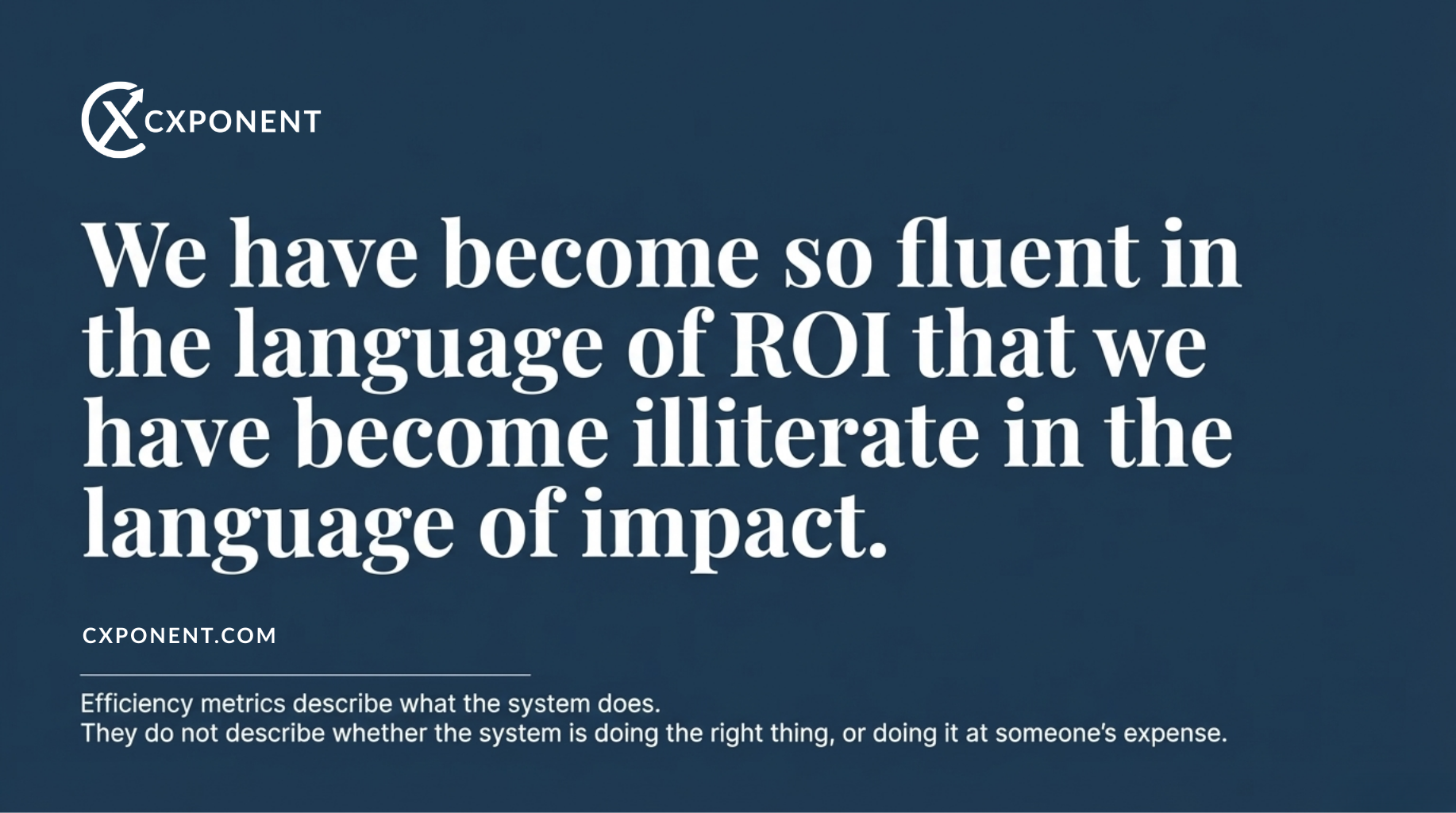
But here’s what I’ve noticed across years of implementing technology: we have become so fluent in the language of ROI that we’ve become illiterate in the language of impact.
And yes — time savings and productivity matter. Nobody funds a project on empathy alone. But efficiency metrics describe what the system does. They don't describe whether the system is doing the right thing, or doing it at someone's expense. That's the gap.
This isn’t unique to any one industry. It happens everywhere we deploy technology.
We say “reduced delivery times by 70%.” We don’t say “a mother in rural Rwanda got the blood transfusion that saved her life during childbirth.”
We say “40% reduction in severe workplace injuries.” We don’t say “a warehouse worker went home to his family that night instead of going to the ER.”
We say “improved employee productivity by 15%.” We don’t say “people stopped dreading Monday morning.”
Those are the stories we miss when things go right. But the same blind spot works in reverse. When we only see metrics, we also miss the warning signs — the automation that increases throughput while grinding people down, the efficiency gain that quietly shifts the burden onto someone who can't push back.
This isn’t just a branding problem. It’s a decision-making problem. When leadership only sees metrics, they optimize for metrics—sometimes at the direct expense of the people those metrics are supposed to serve.
• • •
Three Stories They Won’t Put in the Business Case
Story 1: The Supply Chain That Saved Lives
In 2016, a logistics startup called Zipline partnered with the government of Rwanda to solve a supply chain problem. Rural hospitals were running out of blood. The road infrastructure was unreliable—mountainous terrain, unpaved roads, deliveries that took up to five hours. The solution was autonomous drone delivery from centralized distribution hubs.
The operational results were impressive. According to peer-reviewed research published in The Lancet Global Health, median delivery time dropped from over two hours by road to about 42 minutes by air. Blood product waste fell by 67% across the hospitals served. Zipline now handles 75% of Rwanda’s blood supply outside of the capital, according to the World Economic Forum.
But here’s the story that belongs in every supply chain textbook—and never is:
That same Lancet research found that drone delivery contributed to a 51% reduction in in-hospital maternal mortality from postpartum hemorrhage. A separate retrospective study found an 11.5-fold reduction in the likelihood of death from that condition after implementation.
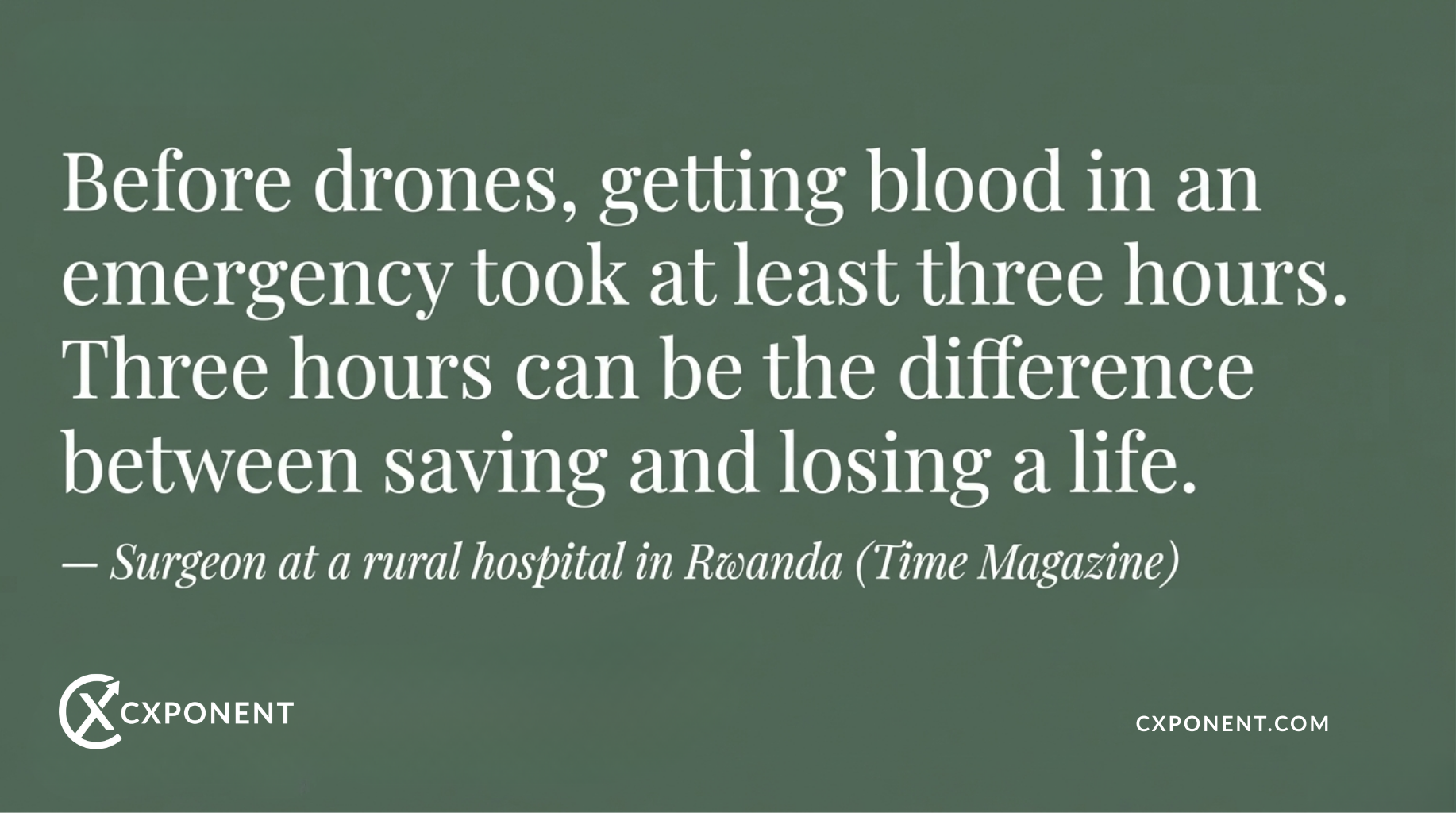
A surgeon at one of the hospitals put it plainly in a Time Magazine profile: before drones, getting blood in an emergency took at least three hours. Three hours, he said, can be the difference between saving and losing a life.
The press release said “delivery optimization.” The reality was that mothers and infants survived who wouldn’t have otherwise.
Story 2: The Automation That Moved the Pain
Here’s one closer to home for anyone who’s funded an automation initiative—which, if you’re reading this blog, is likely most of you.
A peer-reviewed study led by researchers at George Mason University and Boston University examined Amazon fulfillment centers outfitted with warehouse robotics. The headline result looked great: a 40% decrease in severe injuries—broken bones, traumatic falls, the incidents that put people in the hospital.
But the researchers dug deeper. In those same robotic facilities, non-severe injuries—sprains, strains, repetitive motion problems—increased by 77%.
Why? Because the robots handled the heavy lifting, but humans were now expected to match robotic pace. Pick rates were two to three times higher in automated facilities. Workers described the jobs as “not physically exhausting” but relentless. The automation eliminated one kind of harm and created another.
The business case said “reduced severe injuries and increased throughput.” Nobody reported on the sprains, the burnout, or the fact that the humans in the system were being optimized like machines.
Story 3: The 59% Nobody Talks About
This last one isn’t a single case study. It’s a pattern across every technology implementation, in every industry.
Fifty-nine percent of U.S. employees reported burnout in 2024. In a Deloitte survey, 77% said they’ve experienced burnout at their current job. Gallup estimates that burnout costs $322 billion globally in lost productivity and turnover. And employee engagement hit a ten-year low in 2024—just 31% of U.S. workers said they were engaged at work.
Here’s what this means for anyone deploying technology: every system you implement is operated by a human being. Every workflow you automate changes someone’s daily experience. Every efficiency you create either gives people room to breathe—or squeezes them harder.
And yet, according to ICMI research, 45% of organizations don’t even measure employee satisfaction. They can tell you their system uptime to the second. They can tell you their throughput per hour. They cannot tell you whether the people running those systems are okay.
We measure what the technology does. We rarely measure what the technology does to people.
• • •
From Metrics-First to Humans-First
I’m not asking anyone to stop measuring ROI. I’m asking you to measure what the ROI actually means. Three practical shifts:
1. Tell Both Stories
I call this The Two-Column Test. Every business case, every post-implementation review, every board deck should have two columns: what the metrics say, and what actually changed for a human being. When Inland SoCal United Way described their modernization goal, they didn’t just talk about cost efficiency—they talked about better care for the 300,000 callers from their region’s most vulnerable communities. That framing changed how people engaged with the project.
2. Measure What Matters to People—Not Just to Processes
Add employee experience and human outcomes alongside your operational KPIs. If your automation makes throughput faster but your people are grinding through repetitive strain injuries, you haven’t improved anything. You’ve just moved the pain.
3. Let the Humans Speak
The most powerful proof point in the Zipline story wasn’t the 67% waste reduction. It was a surgeon saying “three hours can make the difference between saving and losing a life.” Your employees and your customers have those stories. Ask them. Share them. Let them be the headline.
• • •
The Question to Carry With You
The next time you’re reviewing a business case, approving a project, or celebrating a go-live, ask one question:
“Who is on the other end of this, and how does their life change?”
If you can’t answer that, you don’t understand your own project well enough. And if you can answer it but choose not to tell that story—you’re leaving the most powerful part of your work on the table.
We build, we implement, we optimize. The metrics prove it works. The stories prove it matters.
Run the Two-Column Test. Tell both.
• • •
Sources & References
All claims in this article are sourced. Key references:
-
SoftwareOne / Orange County United Way case study (2024) — 211 wait time reduction, operational efficiency, 1-in-3 household statistic
-
SoftwareOne press release (Feb 2025) — Nine United Ways, 28 counties, 1M+ calls, 4,000 CBOs, Inland SoCal 300K callers
-
The Lancet Global Health (2022) — Zipline delivery times, 67% waste reduction, 51% maternal mortality reduction
-
Research Square, retrospective study (2025, preprint) — 11.5-fold reduction in PPH mortality
-
World Economic Forum — 75% of Rwanda’s blood supply outside Kigali delivered by drone
-
Time Magazine, Zipline profile — Dr. Roger Nyonzima quote on three-hour emergency window
-
Greenwood, Burtch & Ravindran (George Mason / Boston University) — 40% severe injury decrease, 77% non-severe injury increase in automated warehouses
-
High5Test / industry data compilation (2024) — 59% U.S. employee burnout rate
-
Deloitte workplace survey — 77% experienced burnout at current employer
-
Gallup (2024) — $322B global burnout cost; 31% employee engagement (10-year low)
-
ICMI State of Experience survey (2023) — 45% of organizations don’t measure employee satisfaction
About the Author
Nick Richards
GM - CX & AI
Nick Richards leads CXponent’s CX, EX, & AI consulting practice, helping organizations modernize customer experience through UCaaS, CCaaS, automation, and AI—with a focus on outcomes that matter to the people those systems serve.
Need help navigating your technology decisions?
Our advisory team helps you evaluate, negotiate, and implement — at no cost to you.
Talk To Us